My son wanted a desert level. I typed “dessert.”
I’d started using Google Playground, Google’s tool for creating playable games from text prompts, for a personal project: making games for my young son.
This game started as Sprout Siege, inspired by Plants vs. Zombies: place plants on a grid, upgrade them and defend a garden against approaching zombies.
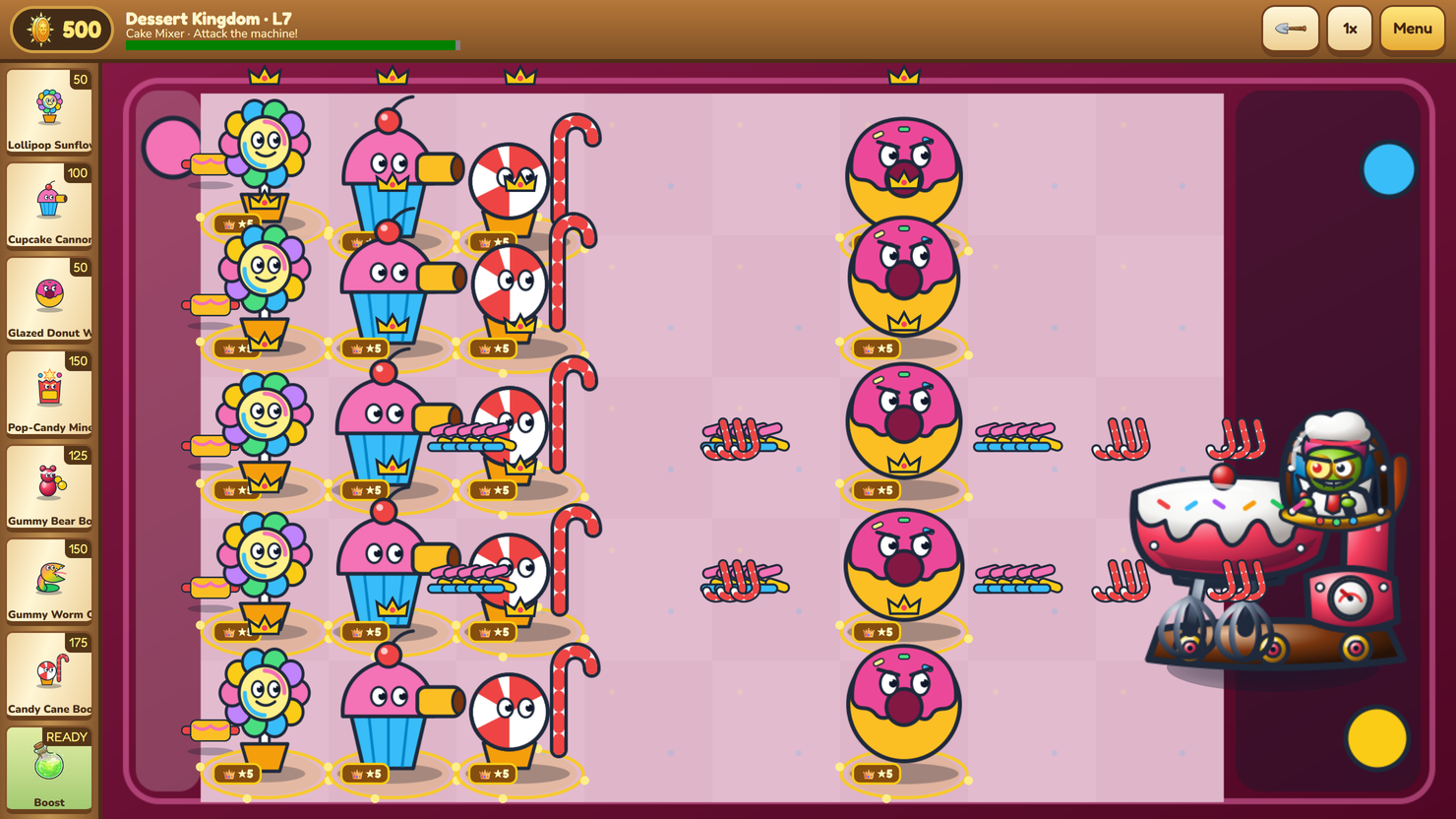
As we added more worlds, he asked for a desert level. My extra “s” took us somewhere else entirely: a world of sweets instead of sand.
That little accident opened something up for him. He didn’t have to stick to gardens, or places he’d already seen in another game. Many of the worlds that followed were his ideas and designs. My job became building a system that could keep up with his imagination.
As a mom, watching that happen was amazing.
The game grew into Everything vs. Zombies, or EvZ. Plants were only the beginning: candy, snakes, toys and bugs could defend their own worlds, too.
He loved it. Then he wanted more.
Playground gave us something worth continuing
Playground supplied the artwork, initial rules, design and music that made this feel like a game, not just code that ran. Short prompts made the distance between his idea and something he could play wonderfully short.
By the time I exported EvZ, it had 8 worlds, each with 6 levels: 48 levels altogether. That was a substantial game, not a throwaway demo.
But as I kept adding to it in the same way, bugs started appearing.
The problem changed when he wanted more
There is a difference between making a game work and making a game you can keep adding to.
The exported game’s main file had grown to 15,400 lines. More importantly, the same rules were repeated in different places.
One concrete example: the code that handled tapping an explosive defender listed the explosive types from six worlds, but missed the ones from Brickland and Bug Meadow. Their explosion effects existed, but tapping couldn’t trigger them.
That wasn’t a lack of creative ideas. It was a rule that had to be remembered and updated in too many places.
My short prompts described the next thing I wanted. They weren’t a reliable record of everything I wanted to preserve.
Once my son wanted more worlds, I needed a base I could build on repeatedly, not just another successful change to the latest version.
What I changed
I moved out of Playground into a separate codebase, working with an AI coding assistant on the rebuild. I kept the original export as a reference, but built around shared game rules. New worlds supplied characters, levels and artwork rather than another copy of the same behaviour.
I recorded the rules in specifications: written descriptions of how the game should behave. For new ideas, I used small pilots: separate previews I could review before changing the full game. Once I’d approved a pilot, AI integrated it into the shared base, with tests to check existing behaviour.
As I repeated that cycle for new worlds, I captured the steps in runbooks: step-by-step processes I tested and refined. Once a process was proven, fixed-rule tasks became repeatable scripts. Tasks that still needed judgement became skills: reusable instructions for the AI coding assistant.
- I set directionGoal, rules, scope
- AI builds a pilotTry the idea
- I reviewApprove or revise
- AI integratesShared base + checks
- We playtestDoes it work? Is it fun?
- We capture lessonsRunbooks and skills
I could still try new ideas, but now I could test them separately before deciding whether to add them to the game.
The payoff: from 8 worlds to 22
The rebuilt game now has 22 worlds and 154 levels.
| Content | Playground export | Rebuilt game |
|---|---|---|
| Worlds | 8 | 22 |
| Ordinary levels | 48 | 132 |
| Additional machine finales | 0 | 22 |
| Total levels | 48 | 154 |
That’s 14 new worlds and 106 additional levels: 98 levels across the new worlds, plus a new finale for each of the original eight. These counts describe the game through October 27, not a claim that every level has finished family playtesting.
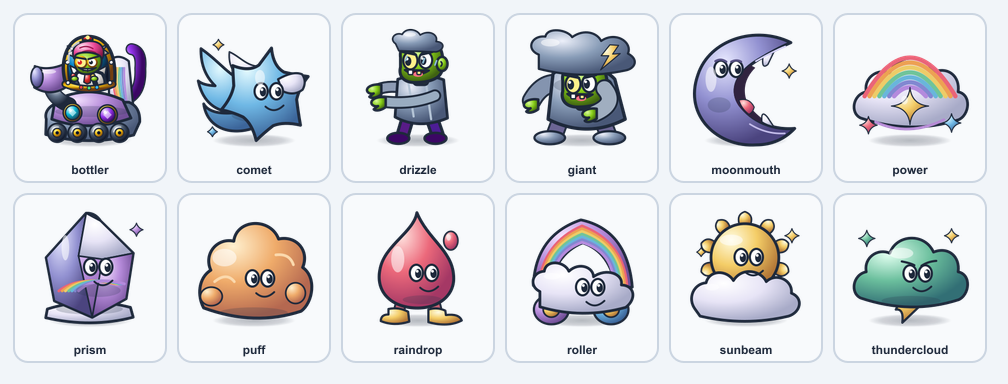
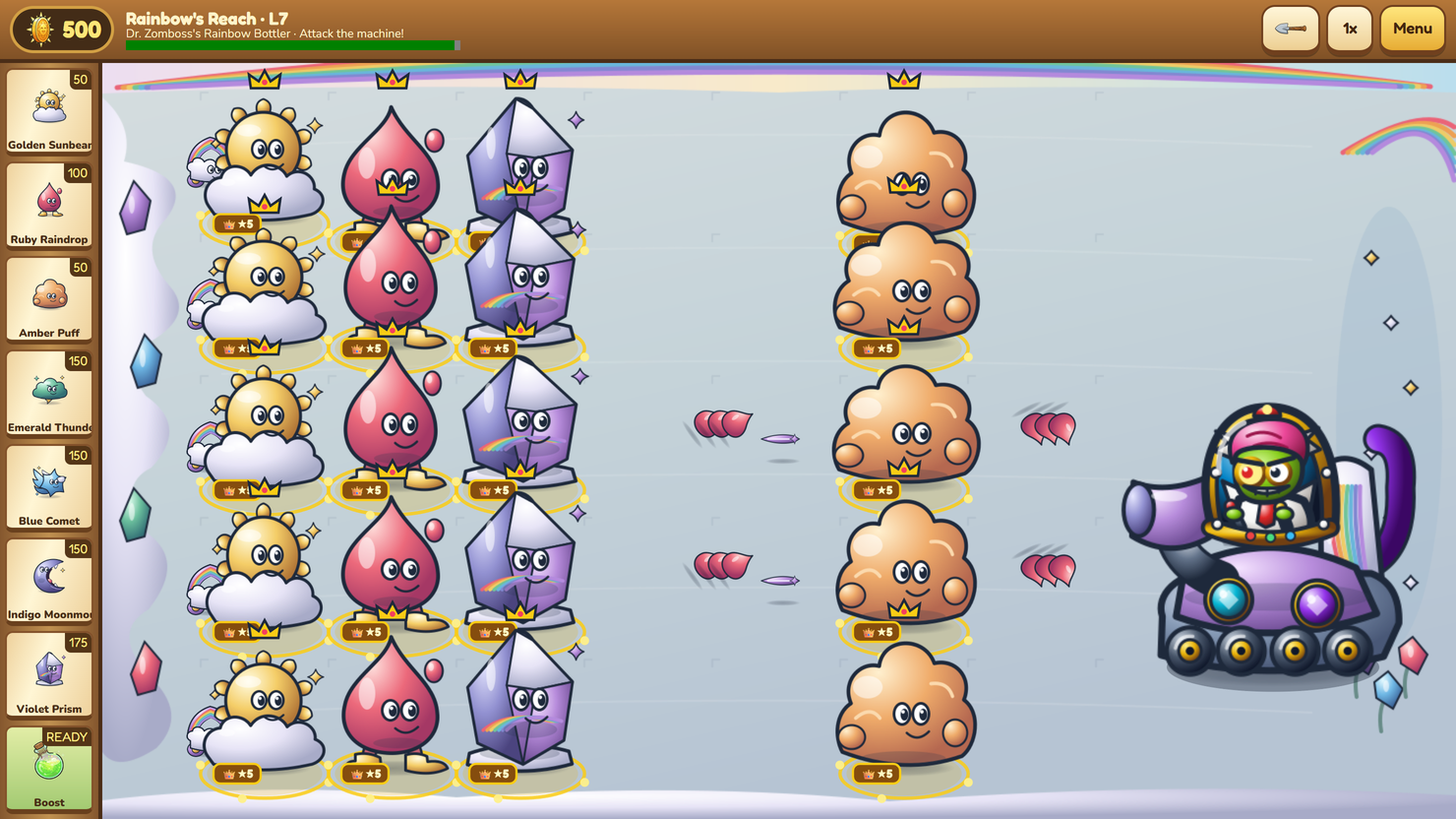
The latest world, Rainbow’s Reach, is a garden above the clouds, with living colours, weather creatures and a machine trying to bottle up the rainbow. It has six ordinary levels and a finale.
It took about 1 hour 40 minutes to go from my first rainbow-world request to a playable world, including pauses for me to approve artwork and make decisions along the way.
That didn’t include later inspection, soundtrack work or deployment. The shared engine, saves, screens and tests already existed.
That last point is the lesson. The new world had somewhere to go.
I didn’t need to design every future world in advance. I needed enough structure for the next change, not an elaborate system for every game we might one day imagine.
AI could build. I still had to steer.
Google Playground helped us find a game we wanted to keep building. I wouldn’t have got there without it. The change wasn’t that I stopped using AI. It was that I stopped relying on the next prompt to hold the whole design together.
I could delegate the implementation. I still owned the engineering decisions.
For Rainbow’s Reach, I let AI propose a roster, generate artwork and build the world. I set the direction and reviewed what came back. I chose a thundercloud that stayed planted and recharged rather than disappearing after one use. When Indigo Moonmouth looked wrong, I asked for another art pass. I approved the artwork before asking for it to be integrated.
Those decisions needed guardrails, not just better prompts.
- Specifications recorded the agreed rules so they didn’t live only in a conversation.
- Scope kept “add a world” from becoming “redesign the game.”
- Shared architecture gave the new world existing rules to use instead of another set to copy.
- Tests checked that adding it hadn’t broken behaviour such as unlocking defenders or resuming a saved battle.
- Pilots let me judge the art and actions before they became part of the full game.
- Runbooks and automation turned proven processes into repeatable scripts for fixed-rule tasks and AI skills for work that still needed judgement.
AI could help with all of that, too. The distinction wasn’t that I did the engineering and AI did the typing. It was that I had to insist on those guardrails, review the results and decide when we were ready to move on. Passing tests still wasn’t the same as my son enjoying the game.
AI helped me build the next level. Software engineering helped me protect the game we already loved.